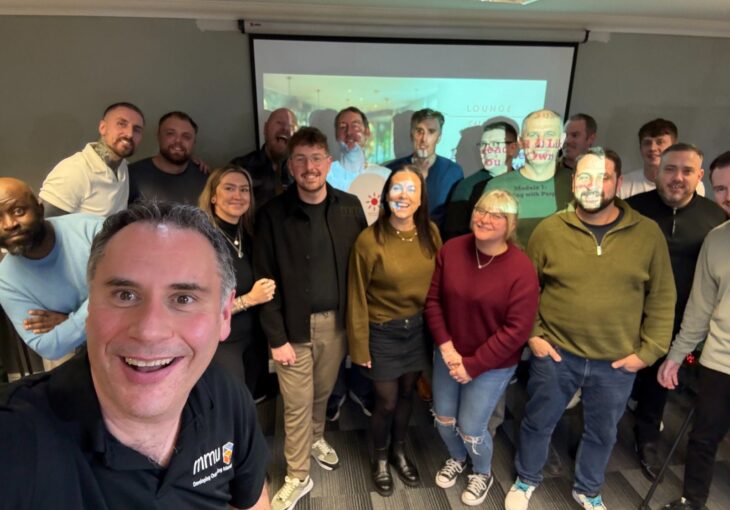
I bought my reMarkable* in the Black Friday sale at the end of 2024, telling myself I was just experimenting. Which, if I’m honest, was probably my way of downplaying the fact that I was quietly hoping it might make a difference.
A year on, I wouldn’t go back.
Not because I’ve become evangelical about a piece of tech (which, to be fair, is often the case with anything Apple-related!), and not because I think it has some magical properties that other tools don’t. What’s changed for me over the past year is something a bit more fundamental than that. It’s my relationship with how I think.
I’ve always thought better with a pen in my hand. Whenever I’m planning, reflecting, coaching, or trying to make sense of something that feels slightly tangled, typing has a habit of pushing me towards speed rather than clarity. My thoughts move faster, but they don’t always go deeper.
Writing by hand slows me down just enough to notice what I’m actually thinking.
Now, to be honest, that’s not new. What is new is how sustainable that way of thinking has become.
reMarkable published an article recently about what happens in our brains when we write by hand. It’s their article, hosted on their site, but the ideas themselves aren’t proprietary. They’re grounded in cognitive science that’s been around for years and reinforced by multiple studies[1].
Stripped back, the research points to a few simple but powerful truths about handwriting:
- It encourages deeper processing rather than passive transcription
- It improves recall and understanding because we’re forced to make sense of what we’re capturing
- It reduces cognitive overload by slowing the pace of thinking
- It helps us focus on meaning, not volume.
Now none of that is exclusive to a tablet and you could absolutely read that research and say, “This applies just as much to pen and paper,” and you’d be right. The brain doesn’t care whether the surface is digital or analogue. The benefit comes from the behaviour, not the device.
And that’s an important distinction because before reMarkable, I was already getting those cognitive benefits from handwriting. What I was also getting, though, was a low-level frustration that I’d quietly accepted as normal.
Notebooks everywhere. Client notebooks, programme notebooks, personal planning notebooks. One in the car, one by the bed, one that had definitely been lost forever, only to reappear months later with a coffee stain and a bent cover.
And then there’s that moment many of us will recognise. You sit down in a meeting or a planning session, ready to go, and realise you’ve brought the wrong notebook. The notes you need absolutely exist. You know you wrote them down. They’re just not with you at exactly the moment they’d be most useful.
Paper is brilliant for thinking. It’s less brilliant for organisation at scale.
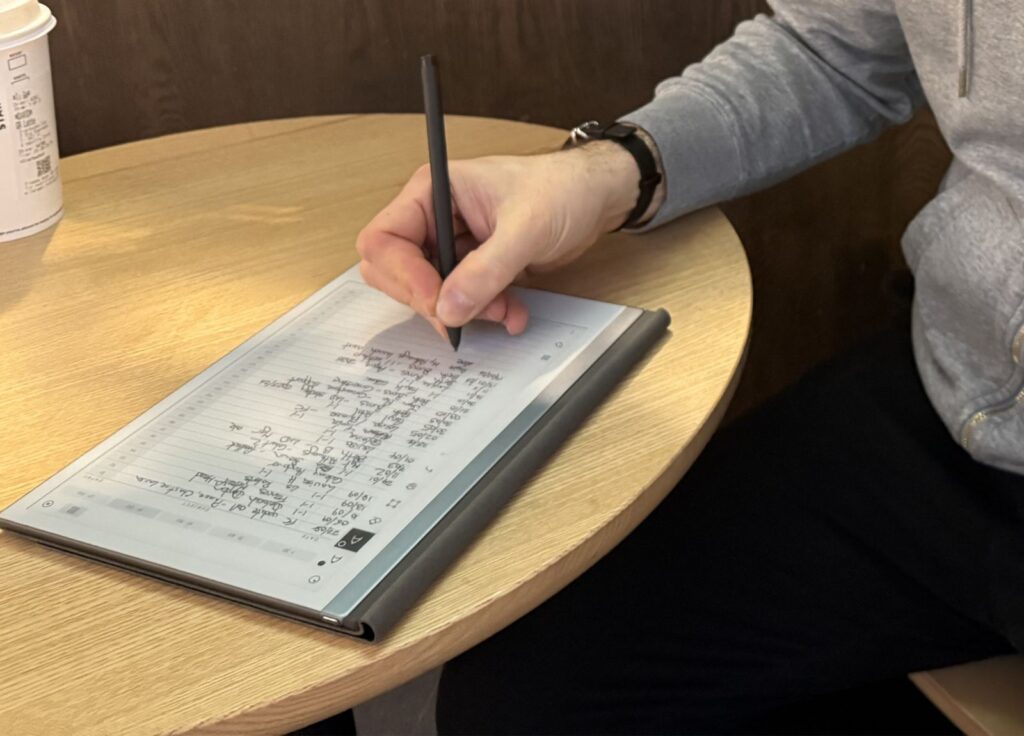
That tension was always there. This is where reMarkable has earned its place for me, but not because it replaces pen and paper thinking. It doesn’t. And it doesn’t need to.
What it does is protect those thinking benefits inside a modern working world where we move between locations, devices, meetings, and contexts constantly.
I still write by hand. I still slow down. I still process rather than transcribe. But now all of that thinking lives in one place. Every meeting, every idea, every scribble, every half-formed thought that felt worth capturing at the time.
And if I don’t have my reMarkable with me, I can still access those notes on my laptop or iPad without any fuss. That practical reassurance matters more than I expected.
There’s also something worth saying about focus.
One of the reasons handwriting works so well is that paper can’t interrupt you. Most digital tools do the opposite. They fragment attention, even when we don’t realise it’s happening.
What reMarkable does well is recreate that paper-like calm while still fitting into a digital workflow. No notifications. No emails sliding into view. No temptation to “just check something quickly”.
It creates a quiet space to think, and over time I’ve noticed that calm carrying forward into better conversations, clearer decisions, and more intentional plans.
So, if I’m being honest, this isn’t really a story about choosing a tablet over a notebook. It’s about choosing how I want to think.
Pen and paper still deliver the deepest cognitive benefits. The research is clear on that. What reMarkable gives me is a way to keep those benefits without losing my notes, carrying multiple notebooks, or starting again because something’s gone missing.
A year in, it’s simply become part of how I work. I don’t think about it much anymore, which is probably the highest compliment I can give it.
I just write, think, and move forward.
And for something that started as a slightly tentative Black Friday experiment, that feels like a pretty good outcome.
* I purchased this with my own money and have no affiliation with the brand.
[1] https://pmc.ncbi.nlm.nih.gov/articles/PMC11943480/ | https://www.psychologytoday.com/gb/blog/positively-media/202403/writing-by-hand-can-boost-brain-connectivity